
Unlocking Business Growth: Why Africa Must Embrace CRM Technology
In today’s hyper-connected global economy, Customer Relationship Management (CRM) systems have become the backbone of modern business success. From New York to Tokyo, companies rely on CRM platforms to streamline operations, enhance customer engagement, and drive exponential growth. Yet, across much of Africa, the adoption of CRM remains surprisingly low—not due to lack of need, but lack of awareness.
What Is CRM and Why Does It Matter?
CRM stands for Customer Relationship Management. It refers to software tools that help businesses manage interactions with current and potential customers. CRM is more than just software—it’s a strategic approach to managing customer relationships, automating workflows, and improving internal collaboration. It empowers businesses to:
- Track leads and customer data.
- Automate sales and supportsprocesses & boosts operational efficiency
- Generate real-time analytics for smarter decisions.
- Foster seamless communication across departments.
- Enhances customer satisfaction.
- Higher retention rates, Increase referrals
- Better upselling and cross-selling opportunities
In advanced economies, CRM is a standard tool for scaling businesses. It’s no coincidence that the most competitive companies in the world are also the most digitally organized.
CRM Complements Core Business Systems
Operational efficiency today demands more than just robust core systems. While ERP platforms in manufacturing, accounting engines in finance, underwriting systems in insurance, and booking tools in hospitality form the backbone of sector-specific operations, they often fall short in managing customer relationships and front-office agility.
That’s where CRM comes in—not as a luxury, but as a strategic necessity. CRM integration bridges the gap between transactional systems and customer engagement, enabling unified data flows, personalized service delivery, and faster decision-making across departments and branches
In Western markets, it’s standard practice to integrate CRM with core systems to:
- Centralize customer data across departments.
- Personalize communication and service delivery.
- Automate follow-ups, reminders, and client engagement.
- Improve forecasting and decision-making with real-time insights.
CRM doesn’t replace your core system—it enhances it. It fills the gap between transactional operations and relationship-driven growth. That’s why companies in sectors like healthcare, real estate, education, insurance, and logistics all use CRM to stay competitive.
The Data Speaks: Africa’s CRM Gap
The global CRM adoption rate is staggering—91% of companies worldwide use CRM systems, according to Grand View Research. In contrast, CRM spending per employee in Africa averages just $2.35, highlighting a massive underutilization of digital tools.
This gap is more than a statistic—it’s a missed opportunity. Consider this:
- SME Survival Crisis:Up to 90% of African SMEs fail within five years, often due to poor customer management and lack of structured sales tracking (African Development Bank).
- CRM ROI:Businesses using CRM report a 29% increase in sales, 32% boost in forecasting accuracy, and up to 30x return on investment (Nucleus Research).
These figures make a powerful case: CRM isn’t just a tool—it’s a growth engine and a survival strategy.
McDon Consolidated: Africa’s CRM Trailblazer
Recognizing this gap, McDon Consolidated, a forward-thinking software company based in Canada and Ghana, has developed two CRM products tailored specifically for the African business ecosystem.
DigitCRM
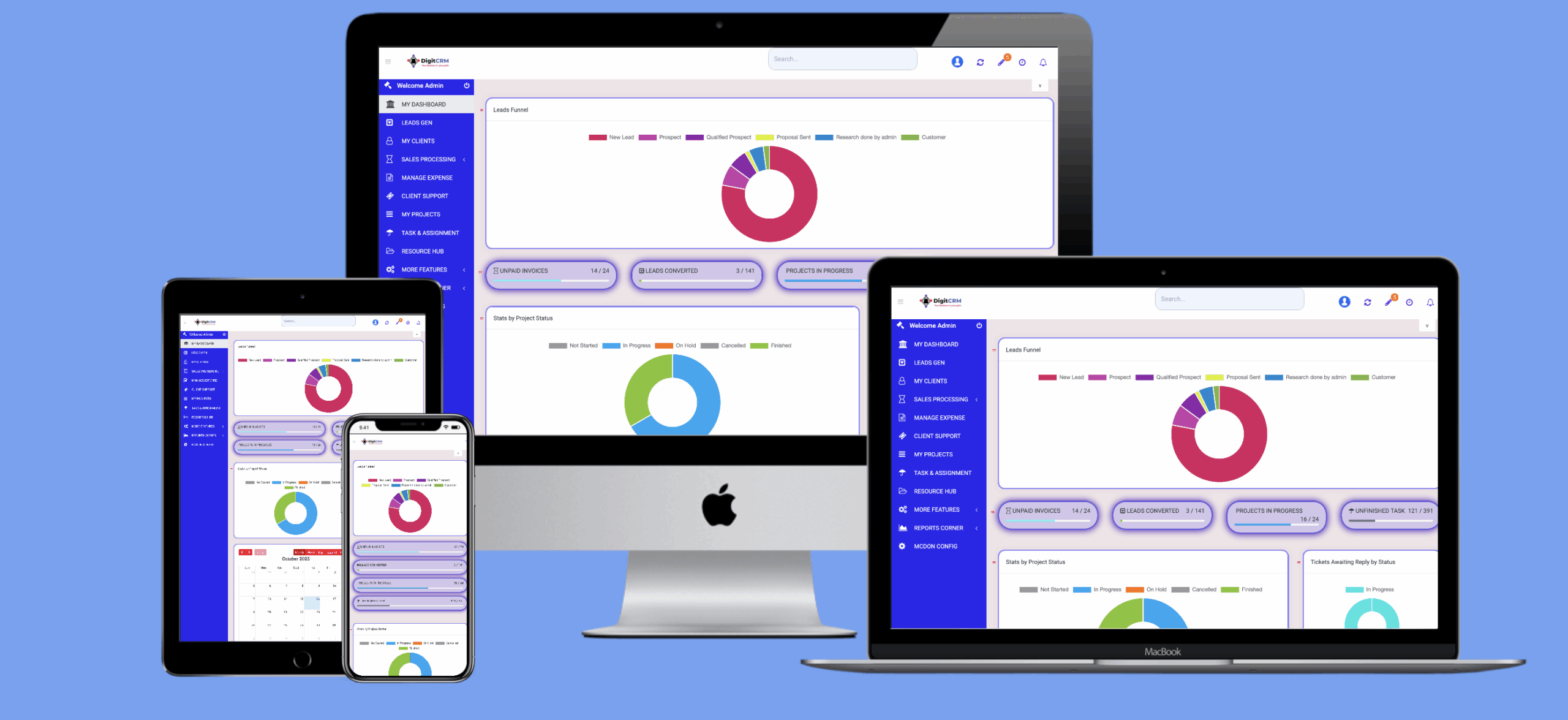
DigitCRM is a smart, mobile-friendly CRM platform tailor-made for SMEs and enterprises across industries—from retail and real estate to professional services to healthcare and education. It offers:
- Lead and client management.
- Automated invoicing and secure payments.
- Workflow optimization and cross-departments& branches collaboration.
- Advanced analytics and reporting.
- A self-service portal for customers.
- Ideal for remote, hybrid, or in-office working environments.
DigitCRM was designed to meet Africa’s business realities head-on, empowering companies with tools that are not just functional, but contextually intelligent.
DigitInsure CRM
DigitInsure CRM is a specialized tailored-made CRM and workflow system designed to support the unique operational needs of various Insurance segments. It offers:
- Tailored policy management modules for life, health, pensions,group business and general insurance including brokers
- Automated claims processing, premium& renewal collection, and complaint resolution customized to each product line
- Real-time collaboration between agents and back-office staff, with sector-specific workflows
- Mobile access for distributionteams to issue invoices and receipts on the go – speed to digital selling
- A self-service portal for customers to manage policies, payment history, policy statements, submit claims, file complaints, and track updates independently—anywhere, anytime
- Integrated payment solutions for seamless premium collection, refunds, and customer transactions across all supported Insurance products
DigitInsure doesn’t replace core Insurance systems—it enhances them, making operations smarter, faster, and more customer-centric.
Both platforms are built to international standards but speak the language of African business—flexible, intuitive, and scalable.
Homegrown Solutions Matter
In a December 2021 article for Harvard Business Review, tech entrepreneur Elo Umeh made a compelling case for why Africa’s digital transformation must be powered by homegrown solutions. Imported platforms, he argued, often fail to accommodate the continent’s mobile-first behavior, fragmented data ecosystems, and regulatory diversity.
“Success requires enterprise solutions that reflect the context and nuances of the continent’s market needs.” — Elo Umeh
McDon Consolidated’s products embody this philosophy. They’re not just software—they’re strategic tools built for Africa’s unique business terrain.
Proof That These Products Work
Real-world results speak louder than features. Here’s how DigitCRM and DigitInsure CRM have transformed businesses:
- A Ghanaian retail chain boosted repeat purchases by 35% using DigitCRM’s segmentation tools.
- An insurance firm in Kenyaslashed claims processing time by 50% with DigitInsure CRM.
- A pan-African logistics startup expanded into three new markets and increased operational efficiency by 40%—managing everything from their phone.
- A Canadian travel and tour company increased invoice processing speed by 30%, reduced payment delays by 40%, and streamlined client document requests and staff shift coordination by 45% using DigitCRM
- A Ghana-based life coaching and counselling business increased client retention by 60% and reduced missed appointments by 50% with DigitCRM’s automated follow-ups.
- A UK-based homecare provider enhanced caregiver scheduling accuracy by 55% and improved client communication response time by 35% through DigitCRM’s mobile dashboard.
These aren’t just numbers. They’re stories of transformation. Stories of possibility.
The Future Is Digital and Collaborative
Africa’s business potential is immense. But to unlock it, companies must embrace tools that drive efficiency, transparency, and growth. CRM is not a luxury—it’s a necessity.
With platforms like DigitCRM and DigitInsure CRM, McDon Consolidated is not just offering software; it’s offering a vision for a smarter, more connected African business landscape.
It’s time to move from spreadsheets to strategy. From manual to mobile and automation From reactive to proactive.
Africa doesn’t need to catch up—it needs to leap forward.
Reference: Elo Umeh, “Digital Transformation in Africa Requires Homegrown Solutions,” Harvard Business Review, December 15, 2021.
https://hbr.org/2021/12/digital-transformation-in-africa-requires-homegrown-solutions

Cybersecurity: Africa’s Unseen Business Risk—and Its Greatest Opportunity.
Africa’s Digital Boom: A Double-Edged Sword
From the vibrant markets of Accra to the tech corridors of Nairobi, Africa is experiencing a digital renaissance. Mobile money is mainstream, e-commerce is thriving, and cloud-based platforms are transforming how businesses operate. But as African enterprises embrace digital tools to scale and innovate, a silent threat is growing louder: cybercrime.
Cybersecurity breaches are no longer distant headlines—they’re local realities. And while the continent celebrates digital progress, many businesses remain dangerously exposed.
The Real Cost of Cybercrime
Cyberattacks don’t discriminate. They hit startups, SMEs, corporations, and even public institutions. A single breach can freeze operations, compromise customer data, and drain financial resources.
- Financial Losses:Ransomware, fraud, and recovery costs can cripple cash flow
- Data Theft:Sensitive customer and business data can be leaked or sold
- Operational Disruption: Attacks can shut down systems and halt transactions
- Loss of Trust:Customers lose confidence when their data is compromised
- Legal Consequences:Non-compliance with data protection laws can lead to fines and sanctions
In 2024 alone, African businesses lost an estimated $4 billion to cybercrime, according to data from INTERPOL’s African Cyberthreat Assessment Report and coverage by Graphic Online during the AfPI meetings in Accra. The figure reflects a growing threat that spans sectors and borders, underscoring the urgency for robust cybersecurity strategies.
Cybersecurity Is Not Just Tech—It’s Strategy
Let’s be clear: cybersecurity isn’t just an IT issue. It’s a business imperative.
When your systems are secure, your customers feel safe. Your team works confidently. Your data becomes an asset—not a liability. And your business becomes resilient, ready to scale without fear.
Investing in cybersecurity means:
- Protecting your revenue
- Complying with emerging data laws
- Empowering remote teams
- Building digital trust
- Future-proofing your operations
It’s not a cost—it’s a competitive advantage.
Why Many Businesses Still Hesitate
Despite the risks, cybersecurity adoption across Africa remains slow. Why?
- Limited Awareness:Many business owners don’t realize how vulnerable they are
- Cost Concerns:Security sounds expensive—but breaches cost more
- Resistance to Change:Teams cling to outdated systems
- Infrastructure Gaps:Internet access and digital literacy vary widely
But these barriers are solvable. And the solutions are already here.
McDon Consolidated: Your Cybersecurity Partner
At McDon Consolidated, we’re more than a software company—we’re your go-to partner for cybersecurity solutions. We understand the African business landscape, and we’ve built tools that are:
Affordable: Scalable solutions for startups, SMEs, and enterprises
User-Friendly: No jargon, no complexity—just protection that works
Mobile-Ready: Designed for teams on the move
Locally Supported: Training, onboarding, and real-time assistance
Whether you’re a retailer in Kumasi, a fintech in Lagos, or a logistics firm in Nairobi, we help you secure your digital future—without slowing you down.
How to Get Started
Cybersecurity doesn’t have to be complicated. Here’s how to begin:
Assess Your Risks: Identify your digital vulnerabilities
Train Your Team: Human error is the #1 cause of breaches
Secure Your Systems: Use firewalls, encryption, and secure platforms
Backup Regularly: Ensure you can recover quickly from any attack
Partner with Experts: Let McDon Consolidated tailor a solution for your business
Conclusion: Secure Growth Is Smart Growth
Africa’s digital future is bright—but only if it’s secure. Cybersecurity is not a luxury for large corporations. It’s a necessity for every business, from the corner shop to the multinational.
At McDon Consolidated, we don’t just offer software—we offer peace of mind. We help African businesses protect what matters most: their data, their customers, and their reputation.
The question isn’t if you’ll face a cyber threat. It’s when. And when that moment comes, will your business be ready?
Secure your business. Empower your future. The time is now.

DigitCRM: The Game-Changer Your Business Has Been Waiting For
Imagine a world where every lead is captured, your team operates in perfect harmony, and customer satisfaction is effortless. Now, picture the opposite, missed opportunities, chaotic workflows, and frustrated clients. The difference between these two realities? DigitCRM.
Why Businesses Struggle Without DigitCRM
- Disconnected Teams: Sales, customer service, and project teams operate in silos, leading to lost sales and poor customer experiences.
- Manual Processes Drain Resources: Outdated spreadsheets and endless paperwork slow down growth instead of fueling it.
- Competitors Are Moving Faster: In today’s digital world, speed matters. Businesses using outdated CRM systems fall behind.
- Scaling Feels Impossible: Without the right tools, growth is stunted, frustration builds, and revenue suffers.
- Every inefficiency costs your business more than just money, it costs you potential.Don’t let outdated systems hold you back! See how DigitCRM transforms workflows instantly.
DigitCRM: The Answer to Business Chaos
DigitCRM isn’t just a CRM, it’s a growth engine designed to eliminate frustration and unlock success.
- Seamless Team Collaboration: No more silos. Sales, customer service, and project teams work together effortlessly.
- Customer Engagement That Works: Connect with clients anytime, anywhere, without struggling to keep track.
- Process Automation That Saves Time: Stop wasting hours on manual tasks, DigitCRM handles the heavy lifting.
- Sales & Marketing Optimization: Convert leads fasterwith powerful automation tools.
- Reporting & Insights That Matter: Make data-driven decisionswith real-time analytics.
Stay ahead, scale faster, and turn customer relationships into lasting success!
Request a Demo or 15-days free trial
Your Business Deserves More Than Guesswork
Every moment spent waiting for a response, manually tracking leads, or struggling with disconnected data is a moment that holds your business back.
DigitCRM ensures:
- Your customers feel valued.
- Your team works efficiently.
- Your business scales effortlessly.
- You stay ahead of the competition.
See how businesses are thriving with DigitCRM.
Ready to Transform Your Business?
DigitCRM is here, and businesses are already experiencing the power of efficiency and automation.
Start using DigitCRM today! Sign Up Now
Turn complexity into simplicity, confusion into clarity, and potential into success. DigitCRM is the key.

The Hidden Struggle: How Traditional CRMs Fail African SMEs in the Hybrid Era
African SMEs are adaptable, resilient, and fast-growing, yet many struggle to manage clients effectively in today’s hybrid and remote work environment. The reason? Traditional CRM systems weren’t built for this reality.
Most CRM platforms are designed for office-based operations, assuming businesses have fixed locations, structured workflows, and in-person client interactions. But for African SMEs navigating remote teams, mobile businesses, and decentralized customer management, these systems create more problems than solutions.
The Limitations of Traditional CRMs:
- Rigid Office-Based Models: Most CRMs require desktop access, making mobile and remote use challenging.
- Limited Mobile Functionality: Sales teams in the field can’t update customer data seamlessly, leading to lost opportunities.
- Lack of Integration for Remote Teams: Without cloud-based automation, managing dispersed teams becomes chaotic.
The result? Disorganization, slow response times, and frustrated customers.
Why This Problem Hurts African SMEs
In Africa’s dynamic, fast-moving business landscape, flexibility is key. Customers expect instant service, and businesses must operate efficiently whether in-office, remotely, or in the field. Traditional CRM limitations block growth by:
Slowing Down Sales: Field agents struggle to update leads when CRMs require office access.
Breaking Customer Relationships: SMEs miss follow-ups due to disconnected systems.
Preventing Business Scalability: Without hybrid-ready tools, expanding across locations becomes chaotic and unmanageable.
The Solution: A CRM Built for Africa’s Hybrid Reality
African SMEs need a CRM that moves with them not one that keeps them tied to an office. The future of customer management demands:
Mobile-First Design: Seamless client tracking on smartphones and tablets.
Cloud-Based Automation: Ensure remote teams stay synced in real-time.
Sales Tracking: Predict customer needs and automate follow-ups effortlessly.
Businesses shouldn’t struggle with outdated CRM limitations,they should thrive with tools built for their reality.
Time to Evolve: The Right CRM for Africa’s Growing SMEs
In today’s business world, flexibility isn’t optional, it’s survival. African SMEs need a CRM that adapts to hybrid work, mobile teams, and fast-changing market demands.
Will your business stay stuck in outdated systems or embrace tools that empower growth?
It’s time for a CRM built for Africa’s future and DigitCRM is the answer.

Business Failure: Why 90% of African SMEs Collapse And How to Break the Cycle
Africa’s entrepreneurial spirit is unmatched. From bustling markets to innovative startups, SMEs drive the continent’s economy. Yet, 90% of African SMEs shut down within five years, not because of a lack of ambition, but due to fundamental gaps in customer management and sales tracking.
This failure rate isn’t just a statistic, it’s the loss of dreams, jobs, and economic potential. But there’s a way forward.
The Hidden Threats Behind SME Failure
Many entrepreneurs focus on growth but overlook the systems that sustain it. Without an efficient customer and sales tracking structure, businesses face:
- Lost Revenue Opportunities: Failure to follow up on leads means lost conversions.
- Customer Churn & Poor Retention: Slow responses frustrate clients, pushing them toward competitors.
- Scattered Data & Disorganized Sales: Without structured tracking, businesses struggle to optimize operations.
- Lack of Scalability: Manual processes limit expansion, forcing businesses to shut down.
The result? A slow decline into failure, despite having a great product or service.
The Blueprint for SME Survival
Survival isn’t just about working harder, it’s about working smarter with modern tools and strategies:
Automated Customer Management – Smart CRM Solutions ensure businesses never lose track of leads or relationships.
Real-Time Sales Insights – Instant data access helps businesses adjust strategies before losing revenue.
Fast & Personalized Engagement – Automated tools allow SMEs to respond quickly, build trust, and retain customers.
Seamless Scalability – Businesses scale effortlessly with structured, efficient workflows.
With the right systems, African SMEs can defy the odds and build lasting success.
How DigitCRM & DigitInsure CRM Change the Game
To combat these failure rates, DigitCRM and DigitInsure CRM provide SMEs and insurers with:
- Customer tracking – Never lose a lead or forget a follow-up again.
- Real-time analytics – Instant access to business performance and trends.
- Automation tools – Quick responses, personalized engagement, and seamless transactions.
- Tailored for Africa – Built for businesses navigating the continent’s unique challenges.
Success in Africa’s SME sector is possible, but only with smart, digital-first solutions.
Will your business be part of the 90% that fails or the 10% that thrives?
Let’s rewrite the narrative of African SMEs, one strategic move at a time.

7 Powerful Features That Make DigitCRM the Future of CRM & Workflow Automation
Why Businesses Need DigitCRM Today
In today’s fast-paced digital world, businesses struggle with:
- Inefficient lead management
- Disorganized customer data
- Manual processes draining productivity
- Disconnected teams leading to lost opportunities
Managing clients and maintaining seamless operations can feel overwhelming, but it doesn’t have to be.
That’s where DigitCRM, developed by McDon Consolidated, comes in.
The Game-Changer for Every Industry
DigitCRM isn’t just another CRM, it’s a complete transformation of how businesses interact with customers, automate workflows, and accelerate growth.
Industries Benefiting from DigitCRM:
E-Commerce & Retail – Seamlessly manage orders, inquiries, customer engagement, and inventory tracking.
Finance & Banking – Optimize secure transactions, client portfolio management, and automated reporting.
Healthcare & Telemedicine – Simplify appointment scheduling, patient management, invoicing and payment, and medical records tracking.
Education & Online Learning – Enhance student engagement, admissions tracking, invoicing and payment,and course management.
Real Estate & Property Management – Streamline client interactions, lead generation, invoicing and payment, and deal tracking.
Law Firms & Legal Services – Organize client cases, invoicing and payment,contracts, deadlines, and secure document management.
Professional Services & Consulting – Manage appointments, invoicing and payment, project tracking, and client interactions.
Logistics & Supply Chain – Improve shipment tracking, vendor coordination, and workflow efficiency.
DigitCRM’s powerful features cater to multiple industries, ensuring businesses experience efficiency, accuracy, and growth.
DigitCRM’s Most Powerful Features
Sales & Marketing Automation – Convert leads faster with smart tracking tools.
Customer Service Management – Improve engagement with real-time responses.
Collaborative Digital Workspace – Keep teams aligned and highly productive.
Advanced Reporting & Analytics – Get data-driven insights for smarter decision-making.
Client Self-Service Portal – Offer instant access to customer tools and resources.
Seamless Payment Integration – Manage invoices, receipts, and transactions effortlessly.
Web-to-Lead Automation – Capture new customers without manual intervention.
Why Businesses Are Switching to DigitCRM
DigitCRM solves critical challenges affecting businesses:
- Struggling with customer relationships? → DigitCRM keeps clients engaged effortlessly.
- Losing sales due to poor lead tracking? → DigitCRM automates lead conversion.
- Team members working in isolation? → DigitCRM enhances collaboration.
- Manual processes slowing business growth? → DigitCRM streamlines operations.
- Difficulty scaling your business? → DigitCRM adapts to your needs instantly.
Advanced Security & 24/7 Support
DigitCRM isn’t just about features, it’s built for reliability and security.
Enterprise-Level Data Protection – Safeguard your business with advanced security measures.
Hour LiveChat & BotChat Assistance – Get real-time support anytime.
Dedicated HelpDesk Support – Solve issues quickly and efficiently.
Need help? Contact DigitCRM support → Customer Support Hub
Ready to Transform Your Business with DigitCRM?
DigitCRM is live and ready to optimize customer management, workflow automation, and team collaboration.
Start using DigitCRM today!
Turn complexity into simplicity—DigitCRM is your key to success!
Turn complex challenges into simple solutions—DigitCRM is the future of business success!
McDon Consolidated unveils DigitInsure CRM and Workflow System to the insurance industry.
McDon Consolidated unveils its new product, DigitInsure. DigitInsure is an insurance CRM and workflow system designed for the insurance sector—life, general, pensions, funeral, health, brokers, reinsurers, and group business insurance companies.
It is designed to transform how you manage your insurance business as it ensures seamless collaboration among sales agents and back-office staff, fostering a more efficient and productive work environment.
DigitInsure CRM addresses the unique needs of the insurance sector. It provides the tools you need to succeed in a competitive market. With its mobile-friendly nature, your distribution or sales team can sell policies on the go anywhere, anytime, and issue instant invoices and receipts to clients.
What makes DigitInsure CRM exclusive is its ability to help you manage your entire insurance policy with a click of a button. DigitInsure CRM is not to replace your core insurance application but to augment your day-to-day business operations.
Experience the future of insurance management with our innovative CRM solution.
DigitInsure can be used to collect the first premium, manage claim requests, policies, complaints, leads, back office automation, payment and approval requests, refunds, and resolve double deduction issues.
DigitInsure is a software-as-a-service (SaaS) hosted on the cloud. The insurance business community can visit our website at https://digitinsures.com and sign up for a 15-day trial version to test the functionalities of the software at no cost before making any commitment.
With the extensive industry experience of our developers and their understanding of the complexities of the insurance industry, DigitInsure CRM will not only meet but exceed your expectations and resolve all your issues thrillingly and efficiently.
To our CTO, DonDaddy, “You can be a great developer, but if you don’t understand the business, your developing skills can not be useful in solving the business problems.”.
We welcome the insurance community to experience the future of insurance management with our innovative CRM solution, DigitInsure CRM.
Welcome to McDon Consolidated, where we turn every complex business challenge into simple solutions. As a software company incorporated in 2020, we have delivered cutting-edge software that leads to improved productivity, better customer service, and higher profitability and growth since our inception in 2018. We provide software that enhances team collaboration and customer interactions anywhere, anytime. For more information, visit https://mcdon.net
DigitInsure CRM, your business in your palm…
Unveiling DigitCRM : A Game-Changer in Customer Relationship Management & Workflow System
McDon Consolidated, a leader in Software Development Industry, is thrilled to announce the launch of DigitCRM, a novel solution designed to enhance business interactions with it clients anywhere and anytime and to foster work Collaboration to promote business growth, success, productivity and client satisfaction for every business from startups to Enterprise business regardless of your industry.
This innovative product is set to transform the way businesses operates by offering versatile functionalities, advanced features, user-friendly interface, customisable solutions, scalable platform, enhanced customer insights and innovative technology to transform your customer management to stay ahead of the competition and drive business success.
To Start with, DigitCRM is a comprehensive CRM and Workflow System designed to meet the specific needs of every business of all sizes and industry, designed to solve problems that faces businesses such as inefficient Leads Management, disorganised customer data, poor customer relationships, manual processes, inconsistent communication, Team members working in silos, lack of insightful reporting and difficulty in scaling.
With key features such as sales & marketing, customer service, digital workspace, Security and privacy, finance, reporting & analytics, project management, client self-service portal, payment integration, brand customisation, web-to-lead automation and bulk upload of existing data.
These features provides enhances work collaboration, process automation, sales opportunities, superior customer engagement, seamless project management, invoice, receipts & payment, constant interactions with your clients anywhere, anytime. Available starting 1st January 2022, DigitCRM is poised to make a significant impact in the Software Development and Customer Relationship Management Industry.
Furthermore, developed with SaaS (Software-as-a-Service) Technology and with a user-friendly interface, DigitCRM offers work collaboration and customer satisfaction. It stands out in the market due to its unparalleled collaboration and seamless interactions, it is designed to foster dynamic teamwork and constant engagement empowering your business to connect with its clients anytime, anywhere.
“We are excited to introduce DigitCRM to our customers,” said DonDaddy Kyeremateng, CTO of McDon Consolidated. “This product represents our commitment to innovation and excellence in Customer Relationship Management Software.”
Elevate your productivity and client relationships to new heights with a solution that keeps you in sync, no matter where you are!
In addition to its innovative features, DigitCRM is backed by McDon Consolidated’s exceptional customer support and training programs. Customers can expect 24 hour support via LiveChat, BotChat, HelpDesk Support.
To learn more about DigitCRM and how it can benefit your business, visit https://digitcrm.com or contact McDon Consolidated at hello@mcdon.net